

Bee Removal in Cambridge, MA
Cambridge's older residential neighborhoods and dense urban construction create favorable conditions for bee colonies to establish nests in building cavities, roof spaces, and wall voids. Guthrie Pest Control connects property owners with local bee removal providers who can safely relocate colonies, protecting both your home and the bee population. Prompt removal prevents structural damage and eliminates the risk of stings while addressing the problem humanely.

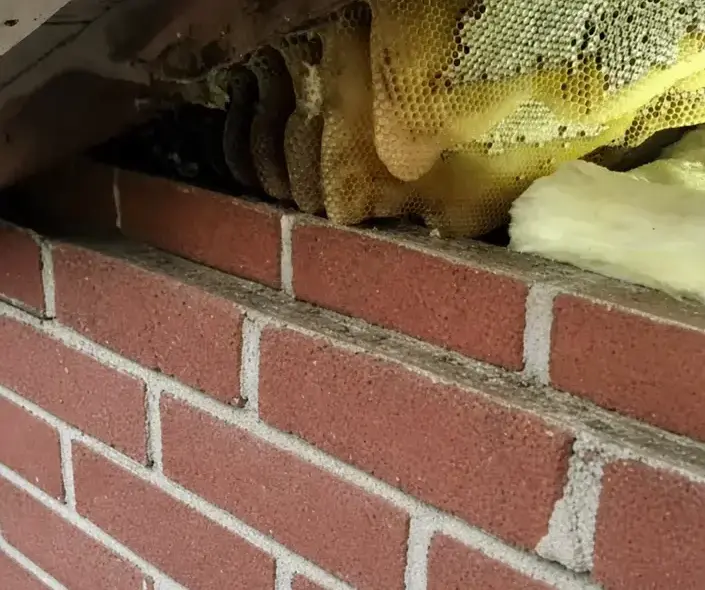
Bee Removal Services for Cambridge Homeowners
Cambridge's mix of older residential buildings and dense urban neighborhoods creates environments where bees often establish colonies in structures, attics, and wall cavities. Property owners across Cambridge—from areas like Harvard Square to Cambridgeport—may encounter honeybees, bumblebees, or other species seeking shelter in or near homes. When a bee colony settles on your property, removal becomes both a safety concern and an ecological consideration, since many bee species are beneficial to the environment. Professional bee removal addresses the immediate need to relocate the colony safely rather than eliminate it, protecting both your family and the local pollinator population.
Guthrie Pest Control connects Cambridge homeowners with independent local pest control providers who specialize in bee removal. These providers assess the colony's location, species, and size, then use appropriate methods to safely capture and relocate bees away from your property. The process often includes removing honeycomb or nesting material and sealing entry points to prevent future occupation. Prompt removal minimizes risk to household members and pets, while supporting the role bees play in the broader ecosystem. If you've spotted a bee colony on your Cambridge property, reaching out for a local removal specialist can resolve the situation quickly and responsibly.
Why Cambridge Homeowners Choose Guthrie for Bee Removal
Local Bee Removal Expertise
Guthrie connects you with independent local providers experienced in Cambridge bee removal. They understand regional bee behavior, nesting patterns, and safe removal techniques suited to residential properties.
Fast Response to Bee Removal Calls
Active bee colonies require prompt attention. Guthrie's network of Cambridge-area providers responds quickly to bee removal requests, minimizing risk to your family and property while protecting the bees.
Clear Communication Throughout Removal
From initial inspection through bee removal completion, Guthrie's providers keep you informed about findings, methods, and next steps. Transparency helps you understand what's happening on your property.
Bee Removal for Cambridge's Dense Neighborhoods
Cambridge's older housing stock and closely built neighborhoods create ideal conditions for bees to establish colonies near homes and shared structures. Guthrie connects you with providers skilled at bee removal in compact urban settings where neighboring properties are nearby.
How Our Bee Treatment Works
Schedule Your Bee Removal Inspection
Contact Guthrie Pest Control and describe where you've spotted bees on your Cambridge property. We'll connect you with a local bee removal provider who will schedule a visit to assess the hive location, species, and nest size.
Professional Bee Removal Assessment
The local provider inspects your property to confirm bee activity and determine the safest removal approach. They will discuss whether relocation or removal is appropriate and explain the timeline for resolving your bee infestation.
Complete Bee Removal and Prevention
The provider removes or relocates the bee colony and hive, then seals entry points to prevent future bee nesting. Follow-up advice on property maintenance helps protect your Cambridge home from recurring bee activity.
Ready to get rid of bees in Cambridge? A local provider can get started fast.
Call (617) 885-0801Bee Removal Across Cambridge Neighborhoods
Cambridge's mix of established residential areas and older urban blocks creates distinct environments where bee colonies establish themselves differently. In tree-lined neighborhoods like Harvard Square and Porter Square, mature trees and aging building stock provide ideal nesting sites—cavities in older wooden structures, hollow tree limbs, and gaps in century-old construction attract swarms seeking shelter. These properties often have the architectural features that bees favor, making removal more common in densely built areas with character homes and complex rooflines.
The timing and nature of bee removal in Cambridge also shifts with the region's seasonal patterns. Spring through fall brings peak bee activity as colonies expand and search for new homes, making this the busiest season for removal calls. Year-round urban density—combined with older construction prevalent throughout Cambridge—means property owners may encounter established hives at any point. A local bee removal provider can assess whether a colony is newly arrived or long-established, and determine the safest approach for your specific property type and situation.
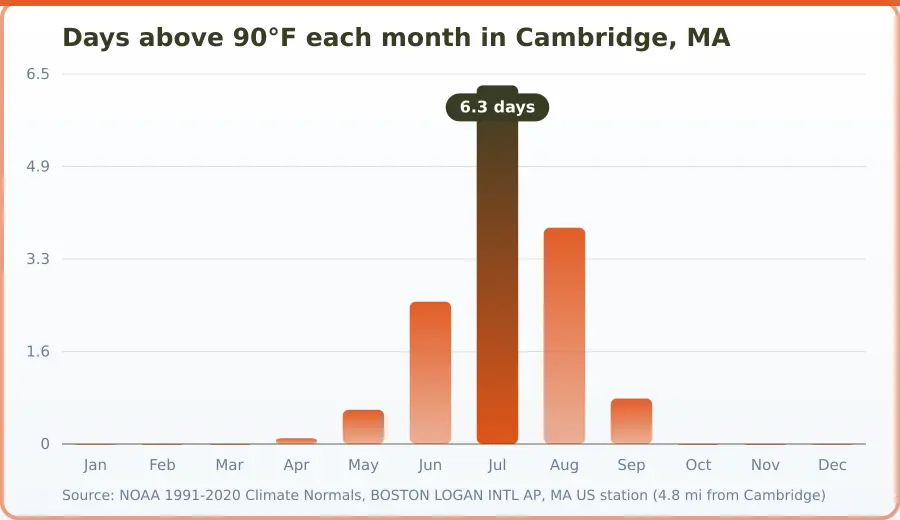
| Period | Days above 90F per month (days) |
|---|---|
| Jan | 0 |
| Feb | 0 |
| Mar | 0 |
| Apr | 0.1 |
| May | 0.6 |
| Jun | 2.5 |
| Jul | 6.3 |
| Aug | 3.8 |
| Sep | 0.8 |
| Oct | 0 |
| Nov | 0 |
| Dec | 0 |
Source: NOAA 1991-2020 Climate Normals, BOSTON LOGAN INTL AP, MA US station (4.8 mi from Cambridge). Retrieved October 27, 2026.
Year-Round Bee Removal: Cambridge's Seasonal Guide
Spring: Swarm Season
As temperatures warm past Cambridge's April 4 last freeze date, honeybee swarms emerge to establish new colonies, often settling in trees, eaves, and wall cavities across neighborhoods like Harvard Square and Kendall Square. Guthrie Pest Control connects you with local bee removal providers who safely relocate swarms before they nest permanently in your home or business structure.
Summer: Peak Activity
Summer heat accelerates bee population growth and foraging activity, with Cambridge averaging 6.3 days above 90°F in July alone. Established colonies become more defensive of their hives, and removal becomes riskier without professional expertise. Guthrie connects you to providers experienced in managing active, protective colonies during peak nesting months.
Fall: Preparation and Pressure
Honeybees intensify foraging and hive preparation before Cambridge's November 9 first frost, making them more visible and prone to defensive behavior around food sources. Established colonies dig in for winter, creating harder removal scenarios. Guthrie Pest Control helps you connect with removal specialists before cold weather makes intervention more difficult and dangerous.
Winter: Dormancy and Shelter-Seeking
Cambridge winters bring 19.8 freezing nights in December and sustained cold that pushes bees into deep dormancy, yet mild spells can trigger foraging and entrance-seeking behavior that drives them toward heated structures. Winter removal is complex; Guthrie links you with providers skilled in safely extracting colonies from wall voids and attics without harming overwintering bees.
Bee Removal FAQs — Cambridge, MA
Bee removal safely relocates or removes colonies from your property without harming the bees when possible. The process typically includes locating the hive, assessing access, and carefully extracting bees and honeycomb. Local providers connected through Guthrie can explain whether relocation or removal is best for your situation and advise on next steps.
Response times vary by provider availability and the urgency of your situation. Contact a local provider through Guthrie as soon as you notice a colony on your property—same-day or next-day service is often possible, especially for active hives near living spaces. The sooner you call, the faster you can connect with help.
Pricing depends on hive size, location (walls, roofs, ground), how long the colony has been present, and whether removal or relocation is needed. Providers will typically assess your specific situation before quoting a price. Contact a local provider through Guthrie for an estimate tailored to your property and bee problem.
Clear the area around the hive and keep pets and family members indoors or at a safe distance during the procedure. Provide the provider access to water and power if needed. Avoid spraying pesticides yourself beforehand—this can make removal more difficult and dangerous. Your provider will give specific prep instructions when scheduling.
After removal, seal entry points and cracks where bees may have entered. Remove or secure food sources and standing water. Trim tree branches near structures and avoid planting flowering plants immediately adjacent to your home. A local provider can suggest additional prevention steps based on what attracted the colony initially.
Bee colonies are most active from spring through fall as they forage and expand their hives. Late spring and early summer often bring the most colony-establishment activity, while fall swarms may occur before winter. Year-round vigilance helps catch infestations early; contact a local provider promptly if you spot bees nesting on your property.
Homeowner Safety Toolkit
Verify Your Cambridge, MA Pest Control Company
Before you hire anyone, use these independent national resources to confirm credentials, standards, and track record.
NPIC
A free, independent hotline run jointly with the EPA and staffed by specialists who can answer specific questions about a pesticide or treatment method before you agree to it.
Ask a QuestionAAPCO
The national association of state pesticide regulators. Use it to find your own state's licensing agency and confirm a company's applicator license is current.
Find Your State AgencyEPA
The federal government's own guide to choosing a pest control method and using pesticides safely around your home and family.
Pesticide Safety GuideRelated Services
Dealing with bees in Cambridge? Get fast, targeted treatment from a local provider.
Call (617) 885-0801Areas We Serve in Cambridge, Massachusetts
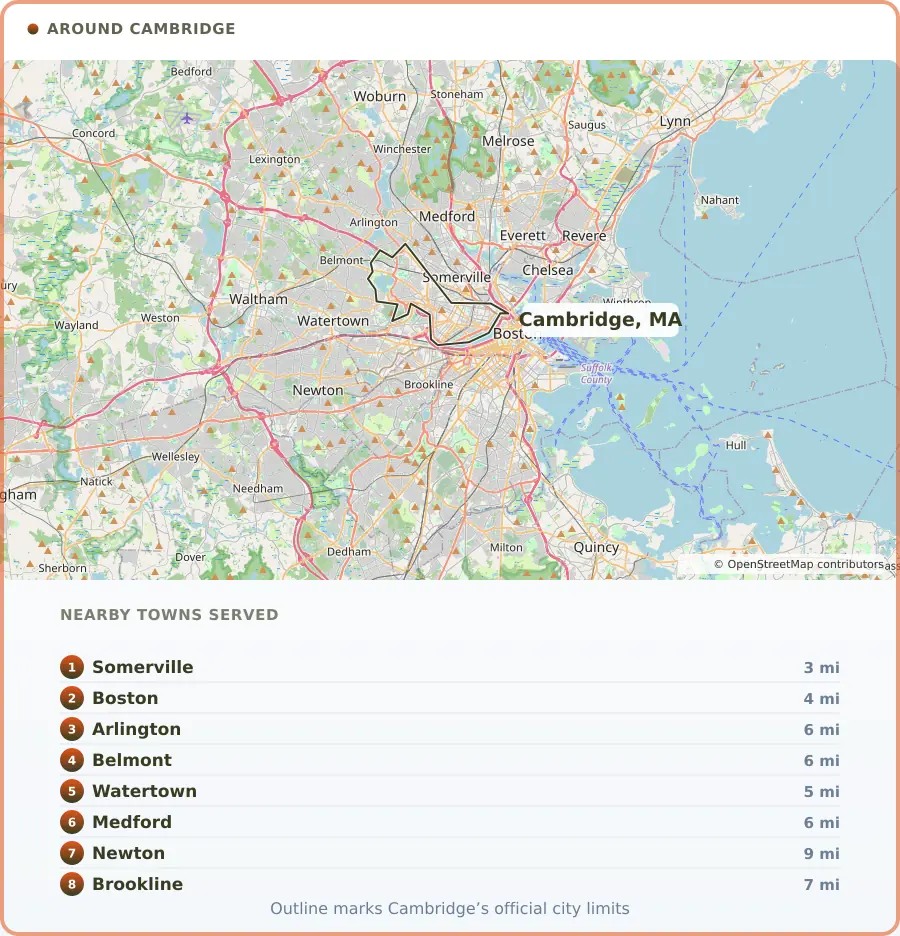
Coverage centres on Cambridge, MA and reaches 8 surrounding communities. Response time is what matters most in the hours after a problem is found, so knowing the ground is part of the job.
Cambridge, MA Information
Just across the river from Boston, Cambridge, MA packs an outsized punch for a city of about 118,000 people. Harvard and MIT give the place its intellectual gravity, but that energy spills into real industry — biotech and pharma labs, software startups, and research outfits cluster thickly around Kendall Square, while names like Biogen, Moderna, and Google keep the innovation economy humming alongside healthcare anchors like Mount Auburn Hospital and Cambridge Health Alliance.
Walk from the bustle of Central Square to the quieter streets of Cambridgeport and the city's layers show: historic houses, classic triple-deckers, and dense rental blocks reflect decades of students, academics, and young professionals cycling through. It's a city built on ideas, but still very much a patchwork of real neighborhoods and real homes.

Photo: Chris Light, CC BY-SA 4.0