

Carpenter Ant Control in Cambridge, MA
Cambridge's older building stock and dense urban layout create ideal conditions for carpenter ant colonies, which can establish themselves in wood structural elements and cause damage that worsens over time if left unaddressed. Guthrie Pest Control connects Cambridge property owners with local pest control providers who can identify carpenter ant activity, locate nests, and implement removal strategies tailored to your home. Getting a local provider involved quickly helps protect your property before an infestation spreads.
Carpenter Ant Control Solutions for Cambridge Homeowners
Cambridge's older housing stock and dense urban environment create ideal conditions for carpenter ant problems. These wood-damaging insects thrive in the region's established neighborhoods, where aged structures and moisture-prone building materials provide both shelter and food sources. Carpenter ants don't just nest in visible areas—they tunnel deep into framing, joists, and support beams over months and years, potentially compromising structural integrity long before visible damage becomes apparent. Homeowners in areas like Harvard Square, East Cambridge, and Kendall Square often discover infestations only after significant wood has been hollowed out, making early detection and professional intervention critical.
Guthrie Pest Control connects Cambridge property owners with local pest control providers who specialize in identifying and eliminating carpenter ant colonies at their source. Rather than relying on surface treatments alone, these professionals conduct thorough inspections to locate nesting sites, entry points, and moisture conditions that attract the insects in the first place. Once the infestation is addressed, providers offer follow-up monitoring to ensure populations don't return and may recommend preventive measures to reduce future vulnerability. By working with a local provider through Guthrie, you gain access to someone familiar with Cambridge's building types and seasonal pest patterns, ensuring a targeted approach to carpenter ant control that protects your property long-term.
Why Cambridge Homeowners Trust Guthrie for Carpenter Ant Control
Fast Local Carpenter Ant Response
Carpenter ant infestations demand urgency—delays allow structural damage to worsen. Guthrie connects you with nearby independent providers ready to assess and treat carpenter ant colonies quickly, minimizing risk to your home.
Thorough Carpenter Ant Treatment Plans
Eliminating carpenter ants requires identifying nests and entry points, not just surface spraying. The independent providers Guthrie connects to develop targeted carpenter ant control strategies tailored to your property's layout and infestation scope.
Clear Communication Throughout Treatment
Carpenter ant control involves multiple visits and follow-up inspections. Guthrie partners ensure you understand each step, timelines, and what to expect—keeping you informed as treatment progresses and protects your home.
Old Homes, Active Carpenter Ant Risk
Cambridge's older building stock creates ideal conditions for carpenter ants to establish colonies in wood structural elements. Homeowners in neighborhoods like Harvard Square and East Cambridge benefit from early detection and proactive carpenter ant management through Guthrie's local provider network.
How Our Carpenter Ant Treatment Works
Schedule Your Carpenter Ant Inspection
Contact Guthrie Pest Control to arrange a visit from a local Cambridge-area provider who specializes in carpenter ant identification and treatment. Your provider will schedule an inspection at your earliest convenience to assess the extent of the infestation.
Assess Carpenter Ant Damage & Entry Points
The local provider will inspect your property for carpenter ant galleries, nesting sites, and structural damage, paying close attention to older Cambridge buildings where these wood-damaging ants thrive. They'll identify moisture sources and entry points to determine the full scope of carpenter ant activity.
Execute Carpenter Ant Control & Prevention
Your provider will apply targeted carpenter ant treatment to eliminate the colony and prevent reinfestation, then recommend moisture control and exclusion measures specific to your property. Follow-up visits may be scheduled to ensure carpenter ant activity has been fully resolved.
Ready to get rid of carpenter ants in Cambridge? A local provider can get started fast.
Call (617) 885-0801Carpenter Ant Control Across Cambridge
Cambridge's mix of older, densely built neighborhoods and established residential areas creates distinct carpenter ant pressures. Homes in areas with mature tree canopies—common throughout Cambridge—face heightened risk, since carpenter ants travel along branches and enter structures through wood-to-soil contact points. Older building stock, particularly in neighborhoods like Cambridge Highlands and Cambridgeport, often has aging wood components, compromised siding, and moisture vulnerabilities that attract and sustain carpenter ant colonies. These structural conditions provide ideal pathways and nesting sites for carpenter ants seeking dead or softening wood.
The region's seasonal pest cycles mean carpenter ant activity intensifies from spring through fall, when foraging and colony expansion peak. However, established colonies inside buildings can remain active year-round, making early detection critical. Properties with accumulated moisture from aging gutters, poor drainage, or roof damage compound the problem. Guthrie Pest Control connects property owners in Cambridge with independent local pest control providers who understand how your home's age, tree proximity, and condition influence carpenter ant risk and guide targeted control strategies.
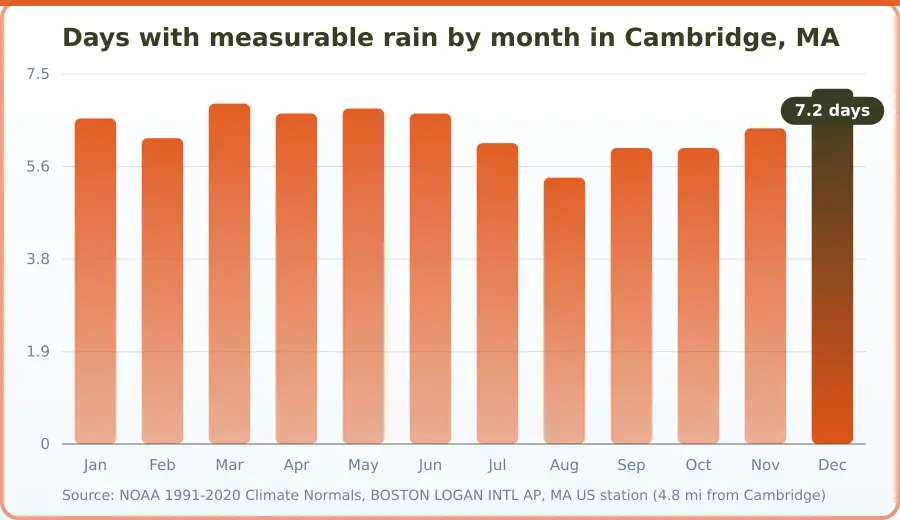
| Period | Days with measurable rain by month (days) |
|---|---|
| Jan | 6.6 |
| Feb | 6.2 |
| Mar | 6.9 |
| Apr | 6.7 |
| May | 6.8 |
| Jun | 6.7 |
| Jul | 6.1 |
| Aug | 5.4 |
| Sep | 6 |
| Oct | 6 |
| Nov | 6.4 |
| Dec | 7.2 |
Source: NOAA 1991-2020 Climate Normals, BOSTON LOGAN INTL AP, MA US station (4.8 mi from Cambridge). Retrieved October 27, 2026.
Carpenter Ant Control Year-Round in Cambridge
Spring: Emergence & Trails
As temperatures rise after Cambridge's last spring freeze on April 4, carpenter ants wake from winter dormancy and resume foraging. Homeowners often spot the first trails and sawdust around wooden structures. Guthrie connects you with local providers who identify nesting sites and active galleries before colonies expand, catching infestations early when treatment is most effective.
Summer: Peak Activity
Summer humidity and warmth accelerate carpenter ant reproduction and feeding. With Cambridge averaging over 6 days of measurable rain monthly, moisture-damaged wood becomes prime nesting habitat. Local providers reached through Guthrie assess structural vulnerabilities and moisture sources, targeting colonies at their most visible and vulnerable stage before populations peak further into fall.
Fall: Preparation & Expansion
Carpenter ants intensify foraging to build reserves before the first frost around November 9. Colonies expand nesting galleries deeper into wood, making detection harder. Guthrie's network connects you with providers who conduct thorough inspections before cold weather drives ants fully into protected interior structures, where winter control becomes far more difficult.
Winter: Indoor Pressure
Cambridge's freezing nights—averaging nearly 20 per month in January—force carpenter ants indoors, where established colonies remain active in walls and wood. While rodents also seek shelter, carpenter ants continue tunneling silently through structural wood. Guthrie connects homeowners with local providers who locate and treat interior colonies during the dormant season, preventing spring expansion of damage.
Carpenter Ant Control FAQs — Cambridge, MA
Carpenter ant control typically begins with a thorough inspection to locate nests and damage within your home's structure. The independent local provider will identify entry points and affected wood areas, then apply targeted treatments to eliminate the colony. Treatment may include interior and exterior applications, depending on where the ants are nesting. Follow-up visits are often scheduled to ensure the infestation is fully resolved.
Response times depend on the local provider you connect with through Guthrie. Many independent pest control providers in the Cambridge area offer same-day or next-day appointments for active carpenter ant infestations. Contact a provider as soon as you notice signs of activity—wood damage and sawdust-like frass indicate an established colony that needs prompt attention.
Pricing for carpenter ant control varies based on infestation severity, the size of your home, how many nests need treatment, and whether interior and exterior work is required. The extent of structural damage already present and the accessibility of affected areas also influence the final cost. When you connect with a local provider, they will assess your specific situation and provide a detailed quote.
Before treatment, clear clutter and debris from areas where the provider will work, especially basements, attics, and crawl spaces. Remove or cover food and pet items in treated zones. The provider will give you specific pre-treatment instructions, which may include vacating certain rooms during application. Ask about re-entry times and any precautions needed after the visit is complete.
Reduce moisture around your home by fixing leaky gutters, downspouts, and plumbing—carpenter ants are attracted to damp wood. Trim branches touching your roof and siding, seal cracks in exterior walls and foundations, and remove dead wood or debris piles near your home. Store firewood away from the house. These steps lower the risk of reinfestation after your local provider completes treatment.
Carpenter ants are most active in spring through fall, when warmer temperatures drive them to forage and establish new colonies. However, they can remain active year-round inside heated buildings. If you notice signs of activity during winter months in Cambridge, contact a local provider promptly—indoor infestations often mean colonies are already well-established within your structure.
Homeowner Safety Toolkit
Verify Your Cambridge, MA Pest Control Company
Before you hire anyone, use these independent national resources to confirm credentials, standards, and track record.
NPIC
A free, independent hotline run jointly with the EPA and staffed by specialists who can answer specific questions about a pesticide or treatment method before you agree to it.
Ask a QuestionAAPCO
The national association of state pesticide regulators. Use it to find your own state's licensing agency and confirm a company's applicator license is current.
Find Your State AgencyEPA
The federal government's own guide to choosing a pest control method and using pesticides safely around your home and family.
Pesticide Safety GuideRelated Services
Dealing with carpenter ants in Cambridge? Get fast, targeted treatment from a local provider.
Call (617) 885-0801Areas We Serve in Cambridge, Massachusetts
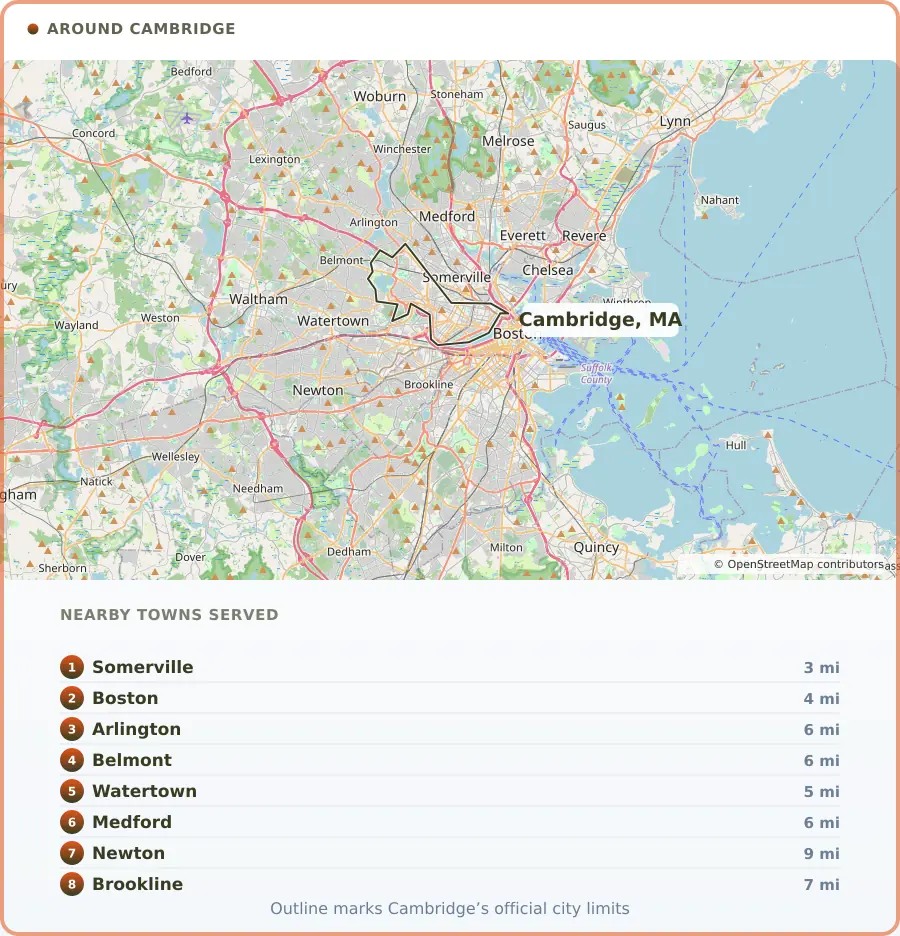
Coverage centres on Cambridge, MA and reaches 8 surrounding communities. Response time is what matters most in the hours after a problem is found, so knowing the ground is part of the job.
Cambridge, MA Information
Just across the river from Boston, Cambridge, MA packs an outsized punch for a city of about 118,000 people. Harvard and MIT give the place its intellectual gravity, but that energy spills into real industry — biotech and pharma labs, software startups, and research outfits cluster thickly around Kendall Square, while names like Biogen, Moderna, and Google keep the innovation economy humming alongside healthcare anchors like Mount Auburn Hospital and Cambridge Health Alliance.
Walk from the bustle of Central Square to the quieter streets of Cambridgeport and the city's layers show: historic houses, classic triple-deckers, and dense rental blocks reflect decades of students, academics, and young professionals cycling through. It's a city built on ideas, but still very much a patchwork of real neighborhoods and real homes.
Photo: Chris Light, CC BY-SA 4.0